Automatic Carton Sealing and Strapping Machine: Improve Factory Packaging Efficiency
In modern manufacturing and distribution, carton packaging is an essential step before products are stored, transported, or delivered to customers. Whether a factory produces food, beverages, electronics, household goods, cosmetics, or industrial components, finished products often need to be packed into cartons and prepared for shipment.
However, when carton sealing and strapping are performed manually, the process can require considerable labor and repeated handling. As production volumes increase, these operations may become a bottleneck in the packaging line.
An automatic carton sealing and strapping machine combines two important packaging operations: sealing carton boxes and securing them with straps. By connecting these processes into a continuous workflow, factories can reduce repetitive manual work, improve packaging consistency, and prepare cartons more efficiently for storage and transportation.
In this guide, we explain how carton sealing and strapping equipment works, its benefits, common applications, and what manufacturers should consider when selecting a suitable machine.
1. Why Is Carton Sealing and Strapping Important for Factories?
Cartons are widely used to package finished products for warehousing, distribution, and shipping. After products are placed inside a carton, the box needs to be closed securely and, when required, reinforced with strapping.
Manual carton packaging often involves several separate operations:
Folding or closing carton flaps.
Applying adhesive tape to seal the box.
Moving the carton to a strapping station.
Positioning and applying plastic straps.
Removing and stacking the finished carton.
When these tasks are performed separately, workers may need to repeatedly lift, move, position, and handle cartons.
This can lead to several production challenges:
High labor requirements: Multiple workers may be needed to handle sealing, strapping, and carton transfer.
Inconsistent packaging: Manual tape application and strap positioning may vary between operators.
Packaging bottlenecks: Manual operations can slow down the final stage of production when upstream equipment runs continuously.
Repeated carton handling: Moving cartons between different workstations takes time and can make the workflow less organized.
Difficult production planning: Packaging output may depend heavily on worker availability and operating speed.
An automatic carton sealing and strapping system helps manufacturers coordinate these operations and create a more organized end-of-line packaging process.
2. What Is an Automatic Carton Sealing and Strapping Machine?
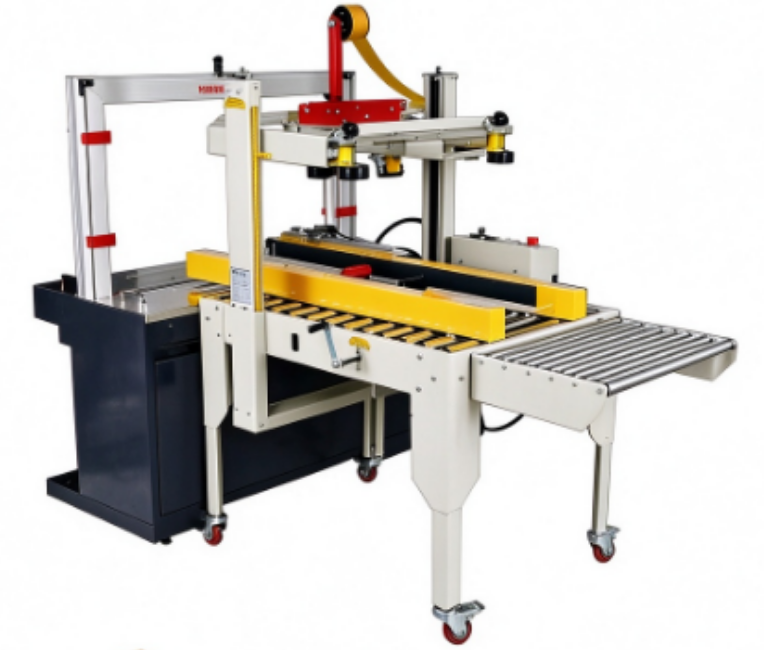
An automatic carton sealing and strapping machine is packaging equipment designed to seal carton boxes and apply straps to secure them for storage and transportation.
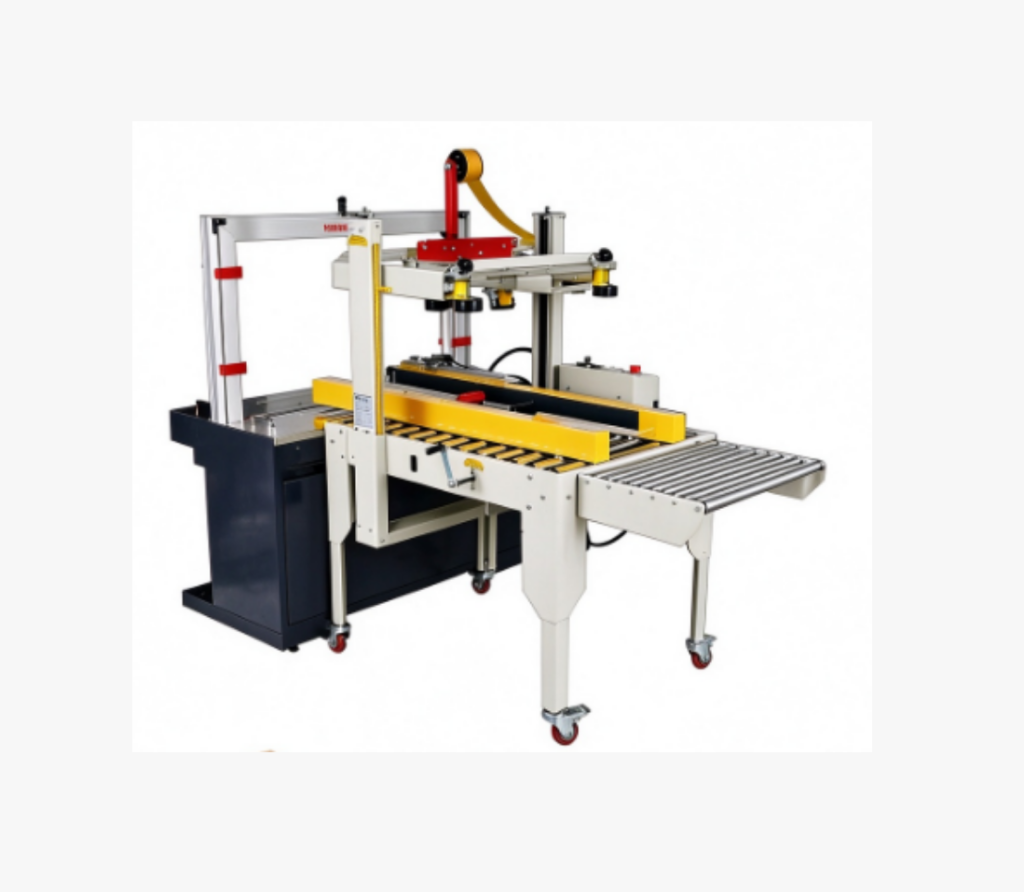
Depending on the machine configuration, the system may combine an automatic carton sealer and a carton strapping machine in one integrated unit or connect them through a conveyor system.
The carton sealing section closes and seals the top and/or bottom of the box with adhesive tape. The strapping section then applies one or more plastic straps around the carton according to the selected strapping pattern.
A typical system may include:
Carton infeed conveyor.
Carton guiding and positioning mechanism.
Top and bottom sealing units.
Adhesive tape feeding and cutting mechanism.
Automatic strapping head.
Strap feeding and tensioning system.
Finished carton discharge conveyor.
Control panel and safety devices.
The exact configuration depends on the machine model, carton dimensions, required sealing method, strap material, and production capacity.
For factories that need a more continuous packaging process, integrating carton sealing and strapping can reduce the need to transfer boxes manually between separate workstations.
3. How Does an Automatic Carton Sealing and Strapping Machine Work?
Although machine designs vary, a typical carton sealing and strapping process follows several steps.
Step 1: Carton Feeding
The carton is placed onto the conveyor and transported into the sealing section. Depending on the system, operators may load cartons manually, or the equipment may be connected to an upstream carton packing line.
Step 2: Carton Positioning
Guiding mechanisms help position the carton for sealing. Some automatic systems can adjust to different carton widths or heights within their specified operating range.
Step 3: Carton Sealing
The sealing section applies adhesive tape to the carton. Depending on the machine design, it can seal the top and bottom center seams or other specified carton surfaces.
This helps close the box before it moves to the strapping section.
Step 4: Automatic Strapping
The carton enters the strapping position. The strapping mechanism feeds the strap around the carton, tensions it, and joins the strap ends through the machine’s configured sealing method.
Common strapping materials include polypropylene (PP) and polyester (PET), depending on the carton, load, and strapping requirements.
Step 5: Finished Carton Discharge
After sealing and strapping, the finished carton moves out of the machine for further handling, palletizing, storage, or shipment.
By coordinating these operations, an automatic system can help factories reduce unnecessary carton transfers and improve the flow of finished goods.
4. Key Benefits of Automatic Carton Sealing and Strapping Equipment
4.1 Reduce Repetitive Manual Work
Manual sealing and strapping require operators to repeatedly handle cartons, apply tape, position straps, and move finished boxes.
An automatic carton sealing and strapping machine can perform these repetitive operations through a coordinated process.
This allows operators to focus more on machine monitoring, material replenishment, quality inspection, and production coordination.
The actual labor savings depend on the existing packaging process, automation level, carton size, and required production output.
4.2 Improve Packaging Consistency
Consistent carton packaging is important for manufacturers that handle large quantities of finished products.
Automatic sealing equipment helps standardize tape application, while the strapping section controls strap feeding and tension according to machine settings.
This can help factories achieve:
More consistent carton sealing.
More uniform strap positioning.
More standardized finished packages.
Reduced variation caused by manual operations.
Correct machine adjustment and suitable consumables remain important for achieving reliable results.
4.3 Improve End-of-Line Packaging Efficiency
In a manufacturing plant, the final packaging stage should keep pace with the upstream production process.
If carton sealing and strapping are too slow, finished products may accumulate near the end of the production line.
An automatic sealing and strapping system can help coordinate these two operations and reduce delays caused by moving cartons between separate workstations.
For factories with higher output requirements, the machine can also be evaluated for integration with conveyors, automatic carton erectors, carton packing equipment, and palletizing systems.
4.4 Prepare Cartons for Storage and Transportation
Carton sealing closes the box, while strapping helps secure the carton or carton load according to the selected packaging arrangement.
For suitable applications, strapping can help keep cartons together and support handling during warehousing and distribution.
The appropriate strap material, strap tension, and strapping pattern should be selected according to carton strength, package weight, and transportation requirements.
Strapping is not a replacement for proper carton design or suitable internal cushioning. Heavy or fragile products may require additional packaging protection.
4.5 Support More Organized Factory Operations
Combining carton sealing and strapping can simplify the layout of the end-of-line packaging area.
Instead of arranging multiple manual workstations with separate carton transfer operations, factories can create a more coordinated packaging flow.
This can make it easier to organize operators, manage packaging materials, and monitor finished carton output.
5. What Is the Difference Between a Carton Sealing Machine and a Carton Strapping Machine?
Although both machines are used in carton packaging, they perform different functions.
Automatic Carton Sealing Machine
A carton sealing machine uses adhesive tape to close and seal carton boxes.
It is commonly used for:
Closing the top and bottom carton flaps.
Sealing shipping boxes.
Standardizing carton sealing operations.
Preparing cartons for further packaging or distribution.
Automatic Carton Strapping Machine
A carton strapping machine applies plastic straps around a carton or carton load.
It is commonly used for:
Securing cartons for handling.
Bundling boxes together.
Reinforcing suitable carton packages.
Preparing products for storage and transportation.
Integrated Carton Sealing and Strapping System
An integrated carton sealing and strapping system combines both processes into a coordinated packaging workflow.
For factories that regularly handle large volumes of carton-packed products, this arrangement can reduce manual transfers between sealing and strapping stations.
The best choice depends on the factory’s carton dimensions, packaging volume, available space, and automation requirements.
6. Common Applications of Carton Sealing and Strapping Machines
Automatic carton sealing and strapping equipment is used in many industries where products are packed into corrugated cartons before distribution.
Food and Beverage Factories
Food manufacturers use cartons to pack snacks, biscuits, packaged foods, beverages, and other finished products.
After cartons are filled, sealing and strapping equipment can help prepare them for warehouse storage and shipment.
Electronics Manufacturers
Electronic products and accessories are often packed into cartons for distribution. Suitable carton sealing and strapping equipment can help standardize the outer packaging process.
Household Products Manufacturers
Cleaning products, household supplies, and daily-use goods are commonly packed in cartons. Automatic sealing and strapping can support repetitive end-of-line packaging operations.
Cosmetics and Personal Care Manufacturers
Cosmetics, skincare products, shampoo, and other personal care goods may be packed into shipping cartons before delivery to distributors or retailers.
E-commerce and Distribution Warehouses
Warehouses and fulfillment centers handle cartons of different sizes and quantities. Suitable sealing and strapping equipment can help organize the final packaging stage before dispatch.
Industrial Parts and Hardware Manufacturers
Metal components, tools, spare parts, and other industrial goods are often shipped in corrugated cartons. Strapping requirements should be matched to the carton strength and load characteristics.
7. How to Choose the Right Automatic Carton Sealing and Strapping Machine
Choosing a suitable machine requires more than comparing equipment prices or advertised speeds.
Manufacturers should evaluate the following factors before purchasing.
7.1 Carton Dimensions
Provide the minimum and maximum carton length, width, and height.
The machine’s operating range must match the cartons used in your production process.
7.2 Carton Weight and Load Characteristics
Carton weight affects conveying, positioning, and strapping requirements.
For heavy cartons, manufacturers should pay particular attention to carton strength, strap material, strap tension, and the number of straps required.
7.3 Sealing Requirements
Determine whether the machine needs to seal the top, bottom, or both.
Also confirm the required tape width, tape type, and carton flap arrangement.
7.4 Strapping Material
Common options include PP and PET straps.
The suitable material depends on carton weight, package dimensions, handling conditions, and required strap strength.
7.5 Required Production Capacity
Provide the expected number of cartons per minute or per hour.
The supplier should evaluate the complete packaging cycle, including carton feeding, sealing, positioning, strapping, and discharge.
7.6 Automation Level
Determine whether you need:
A standalone carton sealing machine.
A standalone carton strapping machine.
A connected sealing and strapping line.
An integrated automatic sealing and strapping system.
Additional conveyors or downstream palletizing equipment.
7.7 Factory Layout and Integration
Provide the available installation space, conveyor direction, and information about upstream and downstream equipment.
This helps the supplier evaluate whether the proposed system can be integrated into the existing production line.
8. Machine Safety and Maintenance Considerations
Automatic carton sealing and strapping equipment includes moving conveyors, mechanical components, cutting mechanisms, and strapping units.
Manufacturers should consider operator safety during machine selection, installation, and daily operation.
For factories operating in the United States, OSHA’s 29 CFR 1910.212 – General Requirements for All Machines describes general machine guarding requirements. It addresses protection from hazards such as rotating parts, ingoing nip points, and points of operation.
The machine’s actual safety design and compliance should be evaluated according to the destination country’s applicable regulations and the equipment’s specific configuration.
Routine maintenance is also important for reliable operation.
Recommended maintenance considerations include:
Inspecting conveyor belts and rollers.
Checking tape feeding and cutting mechanisms.
Inspecting strapping heads and strap paths.
Keeping sensors and operating areas clean.
Checking electrical connections and control components.
Following the manufacturer’s lubrication and maintenance schedule.
Replacing worn parts and consumables when necessary.
Operators should follow the machine manual and site safety procedures when cleaning, adjusting, or maintaining the equipment.
9. How to Improve Your Factory’s End-of-Line Packaging Process
An automatic carton sealing and strapping machine can be part of a wider end-of-line packaging solution.
For example, a factory may arrange its packaging process as follows:
Products are packed into cartons.
Cartons are closed and prepared for sealing.
An automatic carton sealing machine applies adhesive tape.
The cartons move to the strapping section.
A strapping machine secures the cartons.
Finished cartons are conveyed to palletizing or storage.
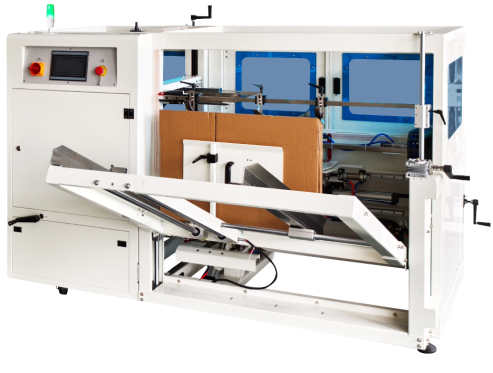
Depending on production requirements, the line may also include an automatic carton erector, carton packing equipment, weighing equipment, conveyors, and palletizing systems.
When planning an automated packaging line, manufacturers should consider the speed of each machine and the transfer of cartons between operations.
The goal is to create a balanced workflow rather than simply selecting the fastest individual machine.
10. Why Choose a Professional Carton Packaging Machine Manufacturer?
Selecting a reliable equipment supplier is an important part of a successful packaging automation project.
A professional manufacturer should understand carton dimensions, sealing methods, strapping materials, production requirements, and factory layout.
At Huixin Intelligent Technology Co., Ltd., we provide packaging machinery solutions for manufacturers across different industries.
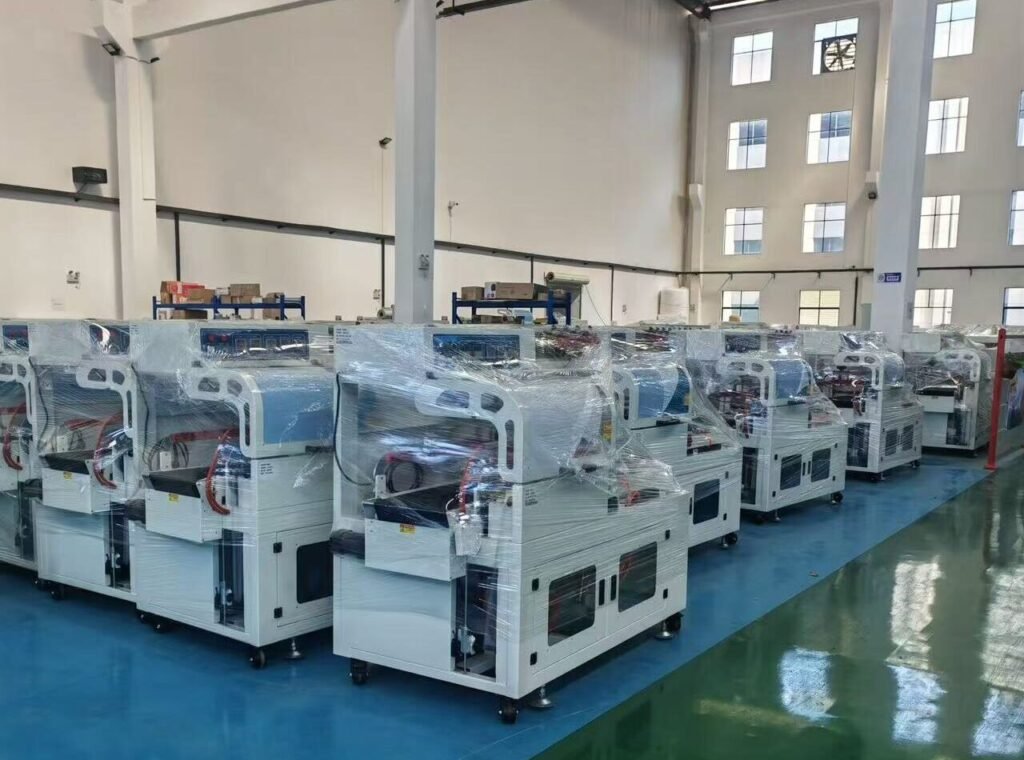
Our packaging equipment range includes carton sealing machines, carton strapping equipment, shrink packaging machines, horizontal packaging machines, and other automated packaging solutions.
We help customers evaluate equipment according to their carton specifications, packaging process, production capacity, and factory layout.
Our support can include pre-sales consultation, equipment configuration, customization, installation guidance, technical training, spare parts supply, and after-sales service.
Our goal is to help manufacturers reduce repetitive manual operations and build more efficient, consistent, and organized packaging processes.
Conclusion: Make Carton Packaging More Efficient with Automation
Carton sealing and strapping are important steps in preparing finished products for storage, transportation, and distribution.
For factories handling large quantities of cartons, automating these operations can help reduce manual handling, improve packaging consistency, and create a more continuous end-of-line workflow.
An automatic carton sealing and strapping machine is a practical option for manufacturers that want to coordinate box sealing and strapping in one packaging process.
The right equipment should match your carton dimensions, package weight, sealing requirements, strap material, production capacity, and factory layout.
Looking for an automatic carton sealing and strapping machine for your factory?
Contact Huixin Intelligent Technology Co., Ltd. and share your carton dimensions, package weight, packaging requirements, and target production capacity. Our team can help evaluate a suitable carton packaging solution for your production line.
Frequently Asked Questions
1. What is an automatic carton sealing and strapping machine?
It is packaging equipment that combines carton sealing and strapping operations. Depending on the configuration, the system seals carton boxes with adhesive tape and applies plastic straps to secure them for handling and transportation.
2. What is the difference between carton sealing and carton strapping?
Carton sealing uses adhesive tape to close carton flaps and seal the box. Carton strapping applies plastic straps around the carton or carton load to help secure it.
3. Can carton sealing and strapping be completed automatically?
Yes. A connected or integrated system can perform both operations automatically, depending on the machine configuration and carton specifications.
4. What types of cartons can the machine handle?
The suitable carton range depends on the machine model. Manufacturers should provide the minimum and maximum carton length, width, and height before selecting equipment.
5. Which strapping material is commonly used?
PP and PET straps are commonly used in carton packaging. The appropriate material depends on carton weight, package dimensions, handling conditions, and required strap strength.
6. Can the machine be connected to an existing production line?
Yes. Depending on the equipment configuration, carton sealing and strapping machines can be connected with conveyors, carton erectors, carton packing equipment, and downstream palletizing systems.