The Importance of Food Packaging Machines for Modern Factories
The food manufacturing industry is becoming increasingly competitive. Food producers must not only manufacture products efficiently but also ensure consistent packaging quality, maintain hygienic production conditions, and meet the demands of distributors, retailers, and consumers.
As production volumes increase, manual packaging methods can become a limitation. Repetitive operations, inconsistent packaging results, labor requirements, and difficulties coordinating production processes can affect overall factory efficiency.
This is why investing in a suitable food packaging machine has become an important decision for modern food factories.
From automatic filling and sealing to vacuum packaging, horizontal flow wrapping, shrink wrapping, metal detection, and checkweighing, food packaging equipment helps manufacturers improve production workflows and manage packaging operations more effectively.
In this guide, we explain why food packaging machines are important, how they support food factories, what types of equipment are available, and how to select the right solution for your production line.
1. Why Are Food Packaging Machines Important for Food Factories?
Packaging is one of the most important stages in food manufacturing. After food products are processed, cooked, prepared, or sorted, they need to be packaged appropriately before storage, distribution, and sale.
For factories handling large production volumes, relying entirely on manual packaging can create several challenges:
Limited packaging capacity: Manual operations may struggle to keep up with high-volume production.
High labor requirements: Repetitive filling, wrapping, sealing, and packing tasks require continuous manpower.
Inconsistent packaging results: Manual operations can lead to differences in package size, filling quantity, sealing quality, and appearance.
Production bottlenecks: Slow packaging processes can affect the overall efficiency of upstream production equipment.
Difficult quality control: Maintaining consistent packaging procedures becomes more challenging when many operations are performed manually.
An automatic food packaging machine helps address these challenges by performing repetitive packaging operations in a more controlled and consistent manner.
For food manufacturers planning to expand production, improve packaging standards, or reduce manual handling, packaging automation can be a valuable investment.
2. Improve Production Efficiency and Packaging Capacity
One of the main advantages of automatic food packaging equipment is its ability to streamline repetitive production tasks.
Depending on the machine type, automated packaging can include product feeding, positioning, filling, wrapping, sealing, cutting, conveying, and finished-product discharge.
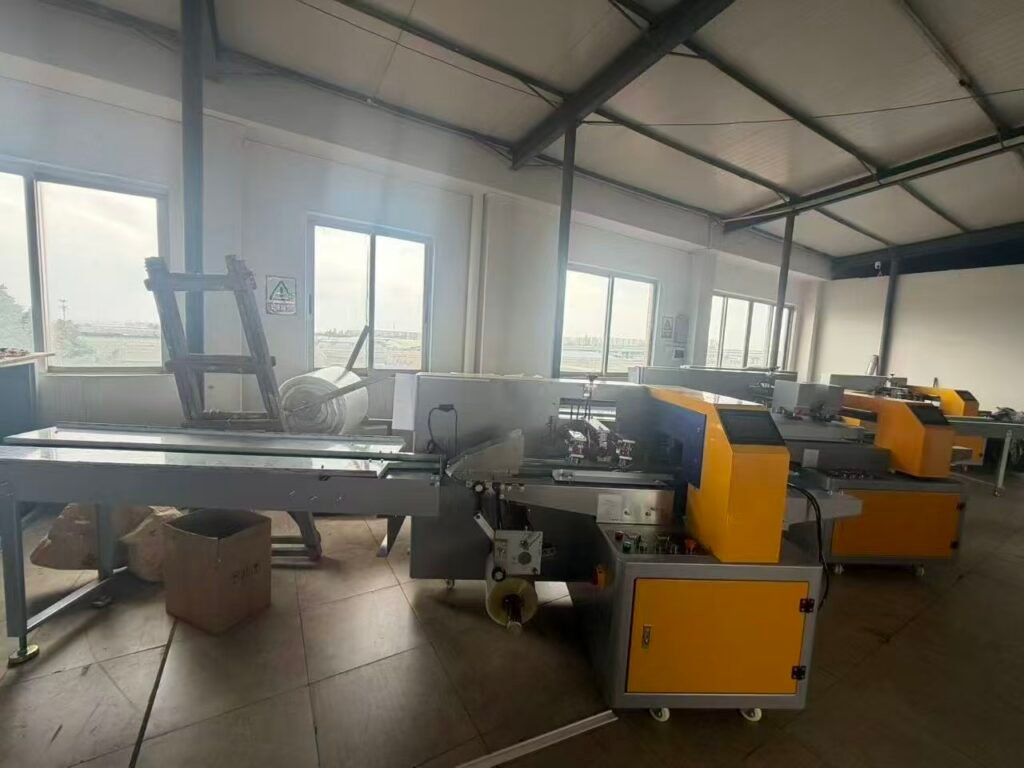
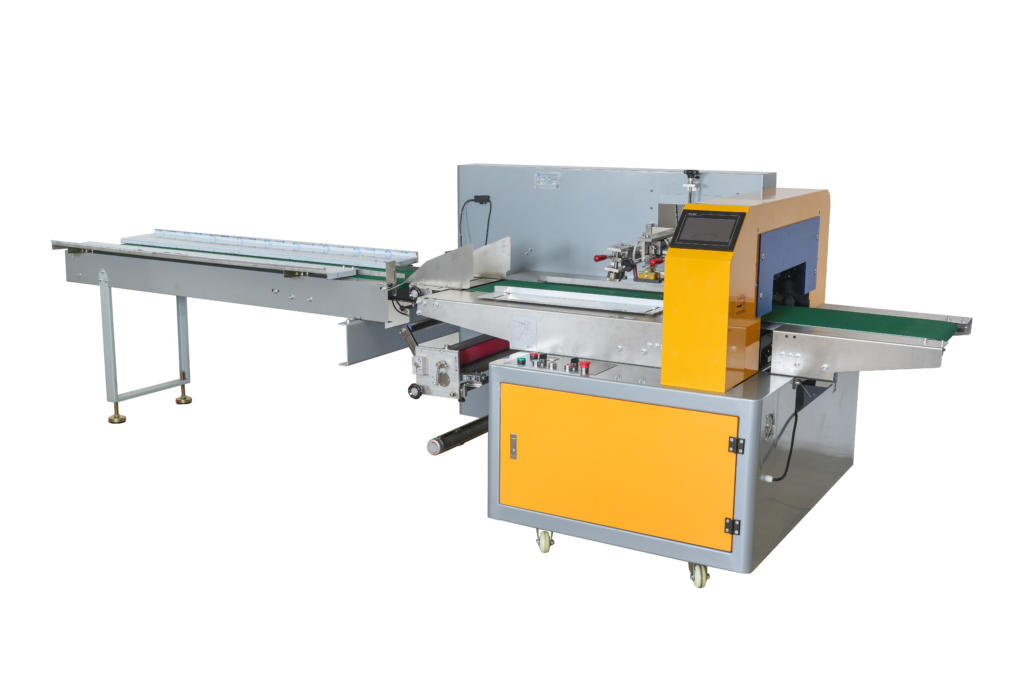
For example, an automatic horizontal packaging machine can continuously feed products into the packaging area, wrap them with film, seal the package, and discharge the finished products.
Similarly, an automatic filling machine can dispense a preset quantity of liquid, sauce, oil, or other suitable products into containers or packaging materials according to its configuration.
These automated operations help factories:
Reduce repetitive manual packaging work.
Maintain a more continuous production flow.
Improve coordination between production and packaging processes.
Handle larger production volumes with a suitable machine configuration.
Reduce unnecessary product handling between operations.
Actual production capacity depends on product dimensions, packaging materials, machine configuration, filling accuracy requirements, operator procedures, and other production conditions.
Therefore, manufacturers should evaluate equipment based on their real products and required output rather than relying only on advertised maximum speed.
3. Reduce Labor Requirements and Operating Pressure
Labor is an important part of food factory operating costs.
When production volumes increase, manufacturers may need additional workers to handle product feeding, weighing, filling, wrapping, sealing, sorting, and carton packing.
An automatic food packaging machine can reduce the amount of repetitive manual work required in these processes.
Instead of manually packaging every product, operators can focus on:
Monitoring machine operation.
Replenishing packaging materials.
Checking packaging quality.
Performing routine cleaning and maintenance.
Coordinating production activities.
This allows factories to organize their workforce more effectively and reduce dependence on manual packaging speed.
Automation does not mean that operators are no longer required. Machines still need supervision, material replenishment, maintenance, and quality checks. However, the right equipment can help manufacturers improve labor utilization and create a more organized production environment.
4. Improve Packaging Consistency and Product Presentation
Packaging consistency is important for food manufacturers supplying supermarkets, distributors, wholesalers, and international markets.
Consumers expect packaged food products to have a clean appearance, reliable seals, and consistent presentation. Businesses also need standardized packaging to support product handling, storage, and distribution.
Automatic food packaging machines use controlled operating processes to help manufacturers achieve more consistent results.
Depending on the equipment, these benefits may include:
Consistent package dimensions
Automatic film feeding, product positioning, and sealing help maintain more uniform packaging formats.
Controlled filling quantities
Automatic filling equipment can dispense preset quantities according to the product, filling system, and machine configuration.
More consistent sealing
Automatic sealing systems help standardize the sealing process when the correct temperature, pressure, and operating parameters are applied.
Professional product appearance
Horizontal packaging, vacuum packaging, and shrink packaging equipment can create neat and standardized finished packages for different food applications.
The final result still depends on proper machine selection, material compatibility, equipment adjustment, and regular quality inspection.
5. Support Better Food Handling and Hygiene Management
Food safety is a major consideration throughout food manufacturing and packaging.
Packaging equipment should be selected and maintained according to the product, production environment, cleaning procedures, and applicable food safety requirements.
For example, equipment used in food processing and packing should be designed to support effective cleaning and maintenance. Where food-contact surfaces are involved, the materials and design should be appropriate for their intended conditions of use.
The U.S. Food and Drug Administration addresses equipment design and maintenance in 21 CFR Part 117.40 – Equipment and Utensils.
The FDA explains that food manufacturing equipment should be adequately cleanable and maintained to help prevent contamination. Food-contact surfaces must also meet applicable material and design requirements.
For international food hygiene guidance, manufacturers can refer to the FAO/WHO Codex Alimentarius document General Principles of Food Hygiene (CXC 1-1969), which provides guidance on good hygiene practices and HACCP principles.
When selecting food packaging equipment, manufacturers should consider:
Whether food-contact parts use suitable materials.
Whether equipment can be cleaned effectively.
Whether the design allows convenient maintenance.
Whether the machine is suitable for the production environment.
Whether the equipment supports the factory’s hygiene procedures.
Not every packaging machine directly contacts food. However, the entire packaging area should be considered as part of the factory’s hygiene and contamination-control system.
6. Improve Packaging Quality Control and Product Reliability
Packaging quality is not only about how a finished product looks. It also involves filling quantity, seal integrity, foreign-material control, package consistency, and the ability to identify production problems.
Food factories can combine different types of inspection and packaging equipment to improve quality control.
For example:
Food Metal Detector
A food metal detector can inspect products for certain metal contaminants, depending on the detector configuration, product characteristics, and sensitivity settings. It is commonly used in food production lines to help identify potential metal contamination before products reach customers.
Automatic Checkweigher
A dynamic checkweigher automatically weighs products as they pass along a conveyor. It can identify products outside configured weight limits and activate a rejection system when integrated with suitable equipment.
X-Ray Inspection Machine
An X-ray inspection machine can help detect certain foreign materials and product defects, depending on material density, product characteristics, and inspection settings.
These inspection systems can be integrated into packaging lines or installed at suitable points in the production process.
Combining packaging and inspection equipment can help factories establish more structured quality control procedures.
However, no single inspection machine can detect every possible food safety hazard. Inspection systems should be selected according to a factory’s hazard analysis, product characteristics, and quality requirements.
7. Different Types of Food Packaging Machines for Modern Factories
Different food products require different packaging methods. A bakery factory, meat processing plant, frozen food manufacturer, and sauce producer may all need different equipment.
Here are several common types of food packaging machines used in industrial production.
7.1 Automatic Horizontal Packaging Machine
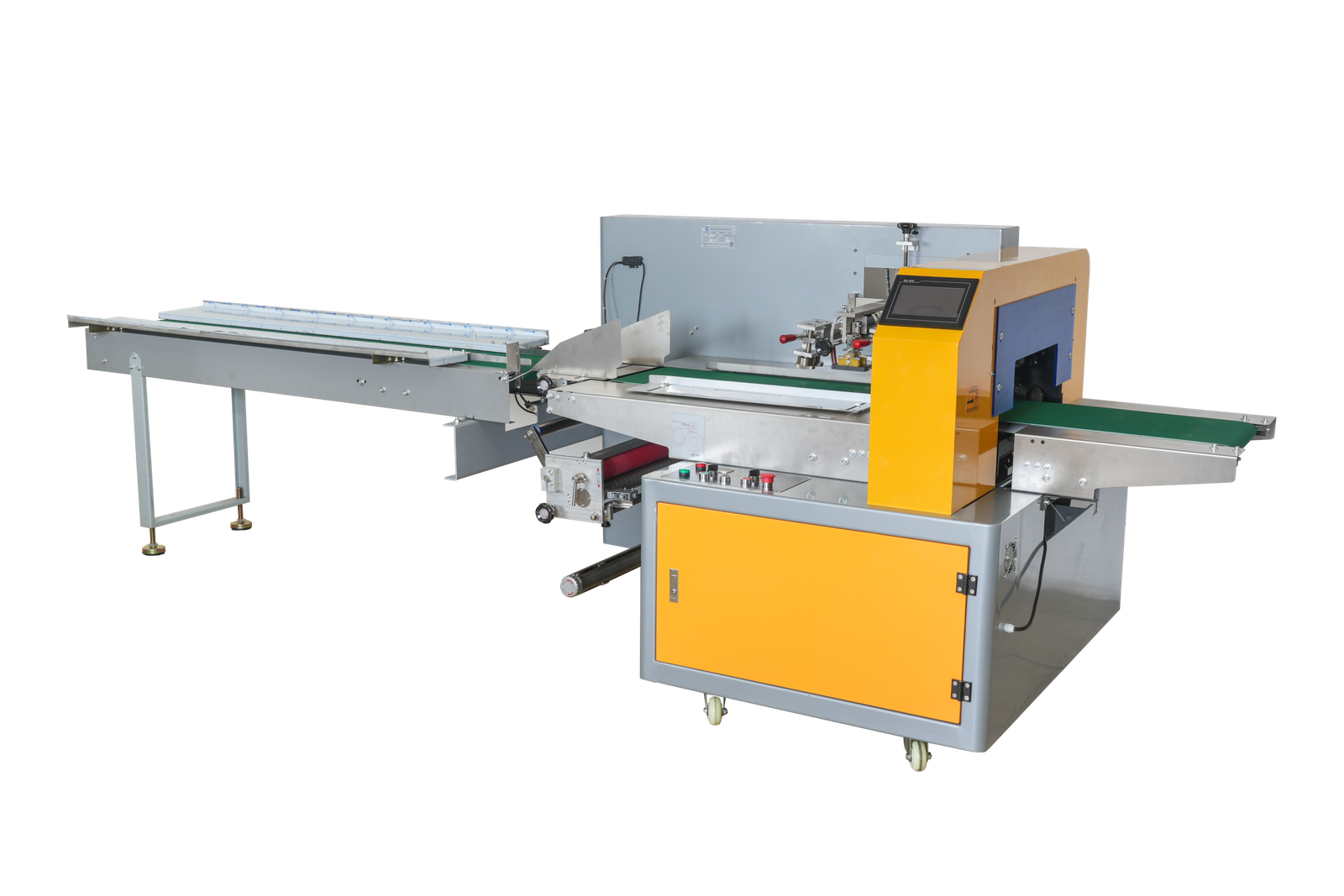
An automatic horizontal packaging machine, also known as a flow wrapping or pillow packaging machine, is commonly used for individual food products.
It feeds products into a continuous film, forms the film around the product, seals the package, and cuts it into individual packs.
Typical applications include:
Bread and bakery products.
Biscuits and cookies.
Vegetables and selected fresh produce.
Frozen food products.
Snacks and confectionery.
Other products suitable for horizontal flow wrapping.
It is a practical solution for factories requiring continuous packaging of individual products.
7.2 Automatic Vacuum Packaging Machine
A vacuum packaging machine removes air from a package before sealing, according to the machine design and packaging material.
It is commonly used for suitable meat products, seafood, processed foods, and other applications where reduced oxygen inside the package is required.
Vacuum packaging can help support product preservation objectives, but the actual shelf life depends on the food, processing conditions, packaging material, storage temperature, and food safety controls.
7.3 Automatic Filling Machine
An automatic filling machine is designed to dispense a controlled quantity of product into containers, bottles, pouches, or other packaging formats.
Depending on the filling system, it can be used for:
Sauces and condiments.
Cooking oil and edible liquids.
Liquid food products.
Pastes and viscous products.
Other products compatible with the selected filling technology.
For food manufacturers, the right filling machine can help standardize filling operations and reduce repetitive manual dispensing.
7.4 Automatic Shrink Packaging Machine
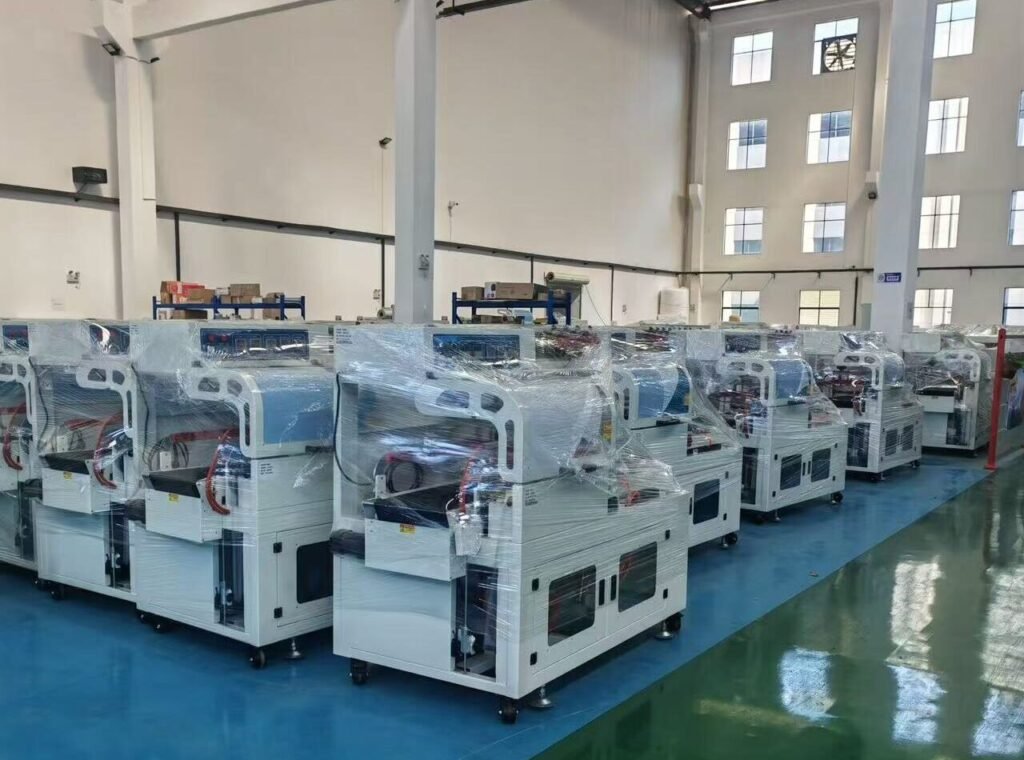
A shrink packaging machine wraps products with shrink film and applies controlled heat to shrink the film around the product or product group.
It is commonly used for multipacks, food trays, cartons, bottled beverages, and selected packaged food products.
Shrink packaging can help group products together and create a neat outer package for handling, storage, and distribution.
7.5 Food Metal Detector
A food metal detector inspects products for specified metal contaminants using electromagnetic detection technology.
It is commonly installed at suitable inspection points in food production and packaging lines.
The detection performance depends on factors such as product characteristics, metal type, aperture size, product effect, and machine settings.
7.6 Automatic Checkweigher
An automatic checkweigher weighs products dynamically as they move along a conveyor.
It can help manufacturers identify packages that are underweight or overweight compared with configured target limits.
When equipped with an automatic reject system, products outside the specified limits can be separated from acceptable products.
This helps factories improve weight control and monitor packaging consistency.
8. How Food Packaging Machines Help Different Food Industries
The most suitable packaging equipment depends on the food product, packaging format, and production requirements.
Bakery and Biscuit Factories
Bread, cakes, cookies, and biscuits may require automatic horizontal packaging machines for individual packaging. Depending on the product, additional weighing or inspection equipment may also be needed.
Meat and Seafood Processing Plants
Suitable vacuum packaging equipment, food metal detectors, checkweighers, and other inspection systems can support packaging and quality control processes.
Frozen Food Factories
Frozen products may require horizontal packaging, vacuum packaging, or other suitable packaging solutions depending on their shape, temperature, moisture characteristics, and packaging material.
Sauce and Liquid Food Manufacturers
Automatic filling machines can help control filling operations for sauces, oils, and other liquid or viscous products.
Fruit and Vegetable Processing Factories
Suitable packaging equipment can be selected for fresh-cut vegetables, prepared produce, and other products according to their size, shape, handling requirements, and packaging format.
There is no universal food packaging machine that suits every product. A practical solution should always be based on the factory’s actual production requirements.
9. How to Choose the Right Food Packaging Machine for Your Factory
Choosing a suitable food packaging machine requires more than comparing equipment prices.
Before purchasing, manufacturers should evaluate several important factors.
1. Product Characteristics
Provide the product name, photos, dimensions, weight, shape, and physical characteristics. For liquid or viscous products, also provide information about viscosity and filling temperature where relevant.
2. Packaging Requirements
Determine whether you need pillow packaging, vacuum packaging, shrink wrapping, bottle filling, pouch filling, or another packaging format.
3. Packaging Material
Different machines support different materials. Discuss the intended film, pouch, tray, bottle, or container with the equipment supplier.
4. Production Capacity
Provide the required output per minute or per hour. The supplier can then evaluate a suitable machine configuration.
5. Food Hygiene Requirements
Consider food-contact materials, cleaning access, equipment maintenance, and the requirements of your production environment.
6. Production Line Integration
Check whether the equipment needs to connect with upstream processing, conveyors, inspection machines, carton packing, or other downstream systems.
7. Technical Support and Spare Parts
Consider installation guidance, operator training, maintenance instructions, spare parts availability, and after-sales support.
Providing these details before requesting a quotation helps equipment manufacturers recommend a more suitable solution.
10. Why Choose a Professional Food Packaging Machine Manufacturer?
Selecting the right supplier is an important part of a successful packaging automation project.
A professional food packaging machine manufacturer should understand different food products, packaging materials, production requirements, and equipment configurations.
At Huixin Intelligent Technology Co., Ltd., we provide packaging machinery and food inspection equipment for manufacturers across different industries.
Our product range includes:
Automatic horizontal packaging machines.
Vacuum packaging machines.
Automatic filling machines.
Heat shrink packaging machines.
Food metal detectors.
Dynamic checkweighers.
X-ray inspection equipment.
We provide equipment recommendations according to product characteristics, packaging requirements, production capacity, and factory layout.
Our support can include pre-sales consultation, equipment configuration, customization, installation guidance, technical training, spare parts supply, and after-sales service.
Our goal is to help food manufacturers improve packaging efficiency, reduce repetitive manual operations, and build more organized production processes.
Conclusion: Build a More Efficient Food Production and Packaging Line
For modern food factories, packaging is not simply the final step of production. It is an important part of manufacturing efficiency, product presentation, quality control, and distribution.
The right food packaging machine can help manufacturers streamline repetitive operations, improve packaging consistency, support better product handling, and connect packaging processes with inspection and production equipment.
Whether you manufacture bread, biscuits, frozen food, meat, seafood, vegetables, sauces, or other food products, selecting suitable packaging equipment can support your long-term production goals.
Looking for a food packaging machine for your factory?
Contact Huixin Intelligent Technology Co., Ltd. and share your product photos, dimensions, packaging requirements, and target production capacity.
Our team can help evaluate suitable packaging equipment and recommend a solution for your food production line.
Frequently Asked Questions About Food Packaging Machines
1. What is a food packaging machine?
A food packaging machine is industrial equipment used to package food products through processes such as filling, wrapping, vacuum sealing, pouch sealing, or shrink wrapping.
2. What types of food packaging machines are commonly used in factories?
Common equipment includes horizontal flow wrapping machines, vacuum packaging machines, automatic filling machines, shrink packaging machines, and other specialized packaging systems.
3. How does an automatic food packaging machine improve factory efficiency?
It automates repetitive operations such as product feeding, filling, wrapping, sealing, and cutting. This can reduce manual handling and support a more continuous production workflow.
4. Can one food packaging machine handle different food products?
Some machines can handle multiple products, but the suitable range depends on product dimensions, shape, material, packaging format, and machine configuration. Product testing is recommended before purchase.
5. What information is needed to select a food packaging machine?
Manufacturers should provide product photos, dimensions, weight, packaging format, packaging material, target output, and any special production or hygiene requirements.
6. Can food packaging machines be integrated with metal detectors and checkweighers?
Yes. Depending on the production layout and equipment configuration, packaging lines can integrate food metal detectors, dynamic checkweighers, X-ray inspection systems, and conveyors to support quality control.