Automatic Carton Erector Machine Buying Guide: How to Choose the Right Machine for Your Factory
Choosing the right packaging equipment is an important decision for manufacturers looking to improve production efficiency and reduce repetitive manual work. For factories that use corrugated cardboard boxes to pack finished products, carton forming is one of the first steps in the end-of-line packaging process.
Manually opening, forming, folding, and sealing carton boxes can take considerable time, especially when a factory handles large production volumes. An automatic carton erector machine helps automate these operations by taking flat-packed cartons, opening them into a box shape, folding the bottom flaps, and sealing the bottom according to the machine configuration.
However, not every carton erector is suitable for every factory. Carton dimensions, cardboard quality, production speed, sealing method, available floor space, and integration requirements all affect the final equipment choice.
This buying guide explains how an automatic carton erector works, what to consider before purchasing, and how to select a suitable carton forming solution for your production line.
1. What Is an Automatic Carton Erector Machine?
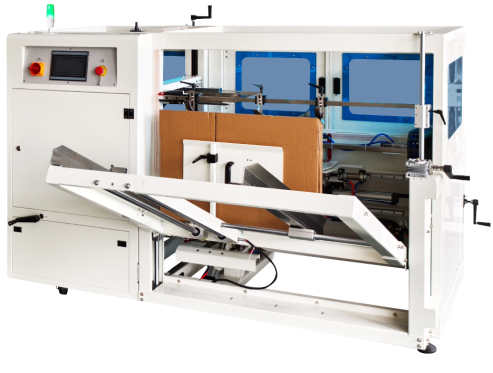
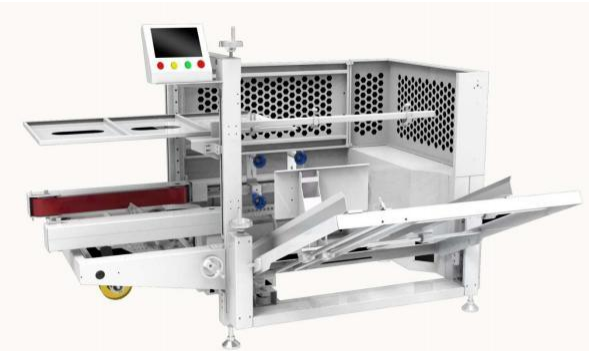
An automatic carton erector machine, also known as an automatic case erector or carton forming machine, is industrial packaging equipment used to automatically form flat corrugated cardboard blanks into open carton boxes.
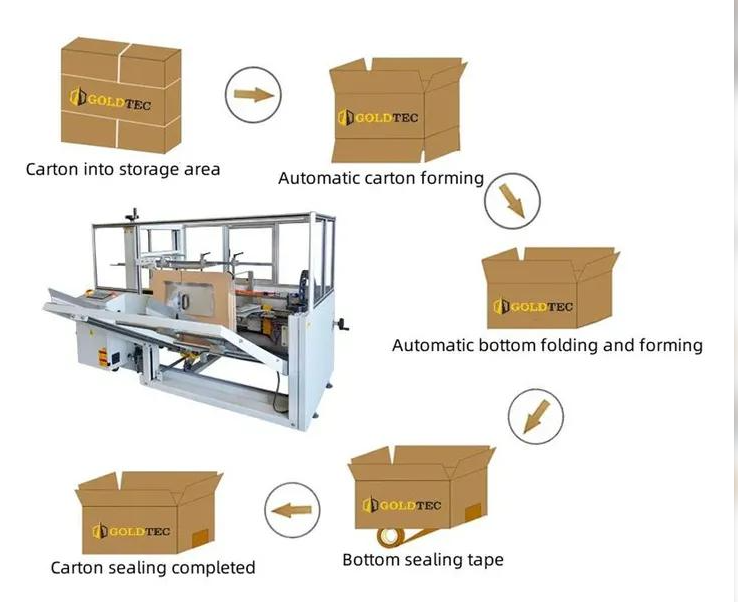
A typical machine performs several operations:
Picks or takes a flat carton blank from the magazine.
Opens the blank into a rectangular box shape.
Squares and positions the carton.
Folds the bottom flaps.
Seals the carton bottom with adhesive tape or another configured sealing method.
Discharges the formed carton for product loading.
The exact process depends on the machine design. Some models use vacuum suction to pick and open cartons, while others use different mechanical opening arrangements.
After the carton is formed and its bottom is sealed, it can be transferred to a manual packing station or an automatic carton loading system.
For factories that regularly use corrugated cartons, an automatic carton erector can help standardize the carton preparation process and reduce manual box assembly.
2. Why Do Factories Need an Automatic Carton Erector?
Carton forming may seem like a simple operation, but it can become a bottleneck when a factory needs to prepare hundreds or thousands of cartons during a production shift.
Manual carton assembly typically involves taking a flat carton, opening it, squaring the box, folding the bottom flaps, and applying tape. Repeating these steps throughout the day requires time and labor.
An automatic carton erector can help factories address several common challenges.
2.1 Reduce Manual Carton Assembly
Automatic carton forming equipment performs repetitive opening, folding, and bottom-sealing operations.
This can reduce the amount of manual work required to prepare cartons and allow employees to focus on product loading, quality inspection, and other production tasks.
2.2 Improve Carton Forming Consistency
Manual carton assembly may result in uneven folding, incorrectly positioned flaps, or inconsistent sealing.
A properly adjusted automatic carton erector helps standardize carton opening, squaring, flap folding, and sealing.
2.3 Support Continuous Production
When cartons are prepared manually, the supply of empty boxes may not always match the speed of the production line.
An automatic carton erector can provide a more organized supply of formed cartons for downstream packing operations, depending on its output capacity and the overall line arrangement.
2.4 Improve Packaging Area Organization
Flat cartons can be stored in stacks and fed into the machine as needed. The machine then forms them into boxes for product loading.
This helps organize carton preparation and reduce the need for multiple manual box-forming workstations.
2.5 Support Packaging Line Automation
An automatic carton erector can be connected with conveyors, automatic product loading equipment, carton sealing machines, strapping machines, and other end-of-line packaging systems.
This makes it a useful starting point for factories planning to automate more of their carton packaging operations.
3. How Does an Automatic Carton Erector Machine Work?
Understanding the working process helps buyers evaluate whether a machine’s design matches their production requirements.
Step 1: Load Flat Carton Blanks
Operators place flat corrugated carton blanks into the machine’s carton magazine.
The magazine stores cartons and supplies them to the forming mechanism. Its capacity and loading method vary by model.
Step 2: Pick and Open the Carton
The machine takes a flat carton blank and opens it into a rectangular shape.
Depending on the design, this operation may use vacuum suction cups, mechanical arms, or other carton-opening mechanisms.
Step 3: Square the Carton
The opened carton is guided into the correct position.
Proper squaring is important because a poorly formed carton may cause problems during bottom folding, sealing, product loading, or downstream conveying.
Step 4: Fold the Bottom Flaps
The machine folds the carton bottom flaps into the required position.
The folding sequence depends on the carton style and the machine configuration.
Step 5: Seal the Carton Bottom
The formed carton passes through the bottom-sealing section.
Depending on the model, the machine may use adhesive tape or another sealing method to close the bottom of the carton.
Step 6: Discharge the Finished Carton
After forming and bottom sealing, the empty carton is discharged for product loading.
It can be transferred to an operator, a packing station, or an automatic product-loading system.
4. The Most Important Factors to Consider When Choosing a Carton Erector
The right automatic carton erector should match the cartons your factory actually uses. Before comparing suppliers or requesting quotations, evaluate the following factors.
4.1 Carton Length, Width, and Height
Carton dimensions are among the most important selection factors.
You should provide the minimum and maximum carton dimensions that the machine needs to handle.
In general, manufacturers should distinguish between:
Carton length.
Carton width.
Carton height.
Do not rely only on the carton volume or a single dimension. The machine must be able to handle the actual combination of length, width, and height within its specified operating range.
If your factory uses several carton sizes, ask the supplier whether the machine can accommodate all of them.
Also confirm whether size changes require manual adjustment, tool changes, or automatic adjustment.
4.2 Carton Style and Flap Design
Not all corrugated cartons have the same structure.
Many shipping cartons use the regular slotted container (RSC) style, which has four flaps at the top and bottom. However, some cartons have different flap arrangements or special structural designs.
Before purchasing, provide clear photos or drawings of your flat carton blanks and confirm that the machine supports the carton style.
A machine designed for one carton structure may not be suitable for another without changes to its configuration.
4.3 Cardboard Quality and Thickness
The quality of corrugated cardboard can affect carton opening and forming.
Important factors include:
Board thickness.
Corrugated flute structure.
Carton stiffness.
Surface condition.
Fold-line quality.
Carton manufacturing tolerances.
Storage and moisture conditions.
If cartons are warped, damaged, excessively soft, or inconsistent in size, the machine may have difficulty opening and forming them reliably.
For this reason, buyers should provide actual carton samples for testing whenever possible.
4.4 Required Production Speed
The required carton output is another key consideration.
A factory should calculate how many cartons it needs per minute or per hour, then compare this requirement with the machine’s rated operating capacity.
However, the maximum speed shown in a specification sheet does not always represent the actual output achieved in a complete production line.
Actual output may be affected by:
Carton dimensions and style.
Cardboard quality.
Machine adjustment time.
Carton magazine replenishment.
Downstream packing speed.
Operator procedures.
Production interruptions.
Choose a machine based on the required production output under your actual working conditions.
4.5 Carton Bottom Sealing Method
Automatic carton erectors commonly use different bottom-sealing configurations.
Adhesive Tape Sealing
The machine applies adhesive tape to close the carton bottom. This is a common option for shipping cartons and general product packaging.
Hot-Melt Adhesive Sealing
Some carton forming systems use hot-melt adhesive to seal carton flaps. This method requires a compatible glue application system and suitable carton materials.
The correct method depends on the carton structure, sealing requirements, packaging environment, and downstream process.
Confirm the sealing method before purchasing, including the consumables and maintenance requirements.
4.6 Automation and Changeover Requirements
Some factories use only one carton size, while others need to switch between several sizes.
If your factory handles multiple carton specifications, consider:
How many carton sizes the machine can support.
How operators adjust the machine.
Whether changeover requires tools.
How long a typical size change takes.
Whether settings can be saved or recalled.
Whether automatic adjustment is available.
A machine that is easy to adjust may be more suitable for factories handling frequent product changes.
4.7 Machine Footprint and Factory Layout
Before purchasing, check the machine’s overall dimensions and the space required for operation.
You should consider:
Machine length, width, and height.
Carton magazine loading space.
Operator access.
Electrical and compressed-air connections, if required.
Conveyor direction and discharge height.
Maintenance and cleaning access.
Connection to upstream and downstream equipment.
A machine may meet your carton and speed requirements but still be unsuitable if there is insufficient space for installation and operation.
5. Automatic vs. Semi-Automatic Carton Erector: Which Is Better?
The choice between automatic and semi-automatic carton forming equipment depends on production volume, labor availability, and automation plans.
Semi-Automatic Carton Forming
Semi-automatic equipment requires operators to perform some carton handling or forming operations.
It may be suitable for smaller production volumes, occasional carton preparation, or factories with limited automation requirements.
Potential advantages include a simpler operating process and lower initial equipment investment, depending on the machine.
Automatic Carton Erector
An automatic carton erector performs carton opening, forming, bottom-flap folding, and configured bottom sealing with less manual intervention.
It is generally more suitable for factories that need regular carton preparation and want to connect carton forming with a larger packaging line.
How to Make the Decision
Consider the following questions:
How many cartons does your factory prepare each shift?
How many workers are currently involved in carton forming?
Does carton preparation slow down product packing?
Do you use one carton size or several?
Are you planning to automate downstream packaging operations?
The right choice should be based on the total production process and long-term operating requirements, not only the initial purchase price.
6. Can an Automatic Carton Erector Be Connected to a Complete Packaging Line?
Yes. Depending on the equipment configuration, an automatic carton erector can be connected to other packaging machines to create a more continuous carton packaging process.
A typical end-of-line packaging workflow may include:
Automatic Carton Erector: Opens flat cartons and seals the bottom.
Product Loading Station: Products are manually or automatically loaded into the formed cartons.
Automatic Carton Sealing Machine: Closes and seals the top of the filled carton.
Carton Strapping Machine: Applies straps when additional carton securing is required.
Conveyor System: Transfers finished cartons to downstream handling or palletizing.
The complete arrangement depends on product characteristics, carton size, required output, available floor space, and the factory’s automation level.
When planning a packaging line, make sure that the output of the carton erector is compatible with the product loading and carton sealing processes.
The goal is to avoid creating a bottleneck at any stage of the line.
7. Common Industries That Use Automatic Carton Erector Machines
Automatic carton erectors are used in many industries where products are packed into corrugated shipping boxes.
Food and Beverage Factories
Food manufacturers use corrugated cartons for packaged snacks, biscuits, beverages, processed foods, and other finished products.
An automatic carton erector can prepare empty boxes for product loading and downstream carton sealing.
Electronics Manufacturers
Electronic components, accessories, and consumer electronics are commonly packed into cartons for storage and distribution.
Cosmetics and Personal Care Manufacturers
Skincare products, shampoo, cosmetics, and personal care items may be packed into shipping cartons before delivery to distributors and retailers.
Household Products Manufacturers
Cleaning products, household supplies, and daily-use goods often require carton packaging for bulk transportation.
E-Commerce and Logistics Warehouses
Distribution centers and fulfillment facilities use cartons of different dimensions to prepare orders for shipment.
The appropriate carton erector depends on the range of carton sizes and the required packaging workflow.
Industrial Parts and Hardware Manufacturers
Tools, spare parts, hardware components, and other industrial products are often packed into corrugated boxes for handling and transportation.
8. What Information Should You Prepare Before Requesting a Quotation?
Providing complete information helps the equipment manufacturer evaluate the application and recommend a more suitable carton erector.
Before requesting a quotation, prepare the following:
1. Carton Photos or Drawings
Provide photos of the flat carton blank and, if possible, a sample of the assembled carton.
2. Carton Dimensions
Provide the minimum and maximum length, width, and height.
3. Carton Material
Share information about corrugated board thickness, flute type, and cardboard quality if available.
4. Required Production Capacity
State how many cartons you need to form per minute or per hour.
5. Sealing Requirements
Confirm whether the carton bottom should be sealed with adhesive tape, hot-melt adhesive, or another method.
6. Number of Carton Sizes
Explain how many carton specifications the machine needs to handle and how often you change sizes.
7. Production Line Information
Share the existing conveyor layout, downstream packing equipment, and available installation space.
8. Destination and Power Requirements
Provide the installation country and applicable electrical supply requirements so the supplier can evaluate the appropriate configuration.
The more accurate the information, the easier it is to evaluate machine compatibility and prepare a suitable quotation.
9. Machine Safety, Installation, and Maintenance
An automatic carton erector contains moving mechanisms, conveyors, suction components, folding units, and sealing devices.
When selecting equipment, manufacturers should consider operator access, guarding, emergency-stop arrangements, maintenance procedures, and the safety requirements applicable in the installation country.
For example, the U.S. Occupational Safety and Health Administration provides general machine guarding requirements in 29 CFR 1910.212 – General Requirements for All Machines.
The regulation addresses protection from machine hazards such as moving parts and points of operation. Buyers should evaluate the actual machine design and applicable local requirements rather than assuming that a general reference automatically certifies a particular machine.
Routine maintenance is also important for stable operation.
Common maintenance considerations include:
Checking suction cups and vacuum components, where fitted.
Inspecting carton feeding and opening mechanisms.
Checking conveyor belts and rollers.
Inspecting tape application or adhesive systems.
Keeping sensors and operating areas clean.
Checking pneumatic and electrical connections, where applicable.
Following the manufacturer’s maintenance schedule.
Operators should receive suitable training and follow the equipment manual when operating, adjusting, cleaning, or maintaining the machine.
10. Why Choose an Experienced Automatic Carton Erector Manufacturer?
A suitable carton erector is not selected by machine price alone. The supplier should understand your carton specifications, production capacity, sealing requirements, and packaging line layout.
An experienced packaging machinery manufacturer should be able to evaluate your carton samples, confirm machine compatibility, recommend a suitable configuration, and provide technical support.
At Huixin Intelligent Technology Co., Ltd., we provide packaging machinery solutions for manufacturers across different industries.
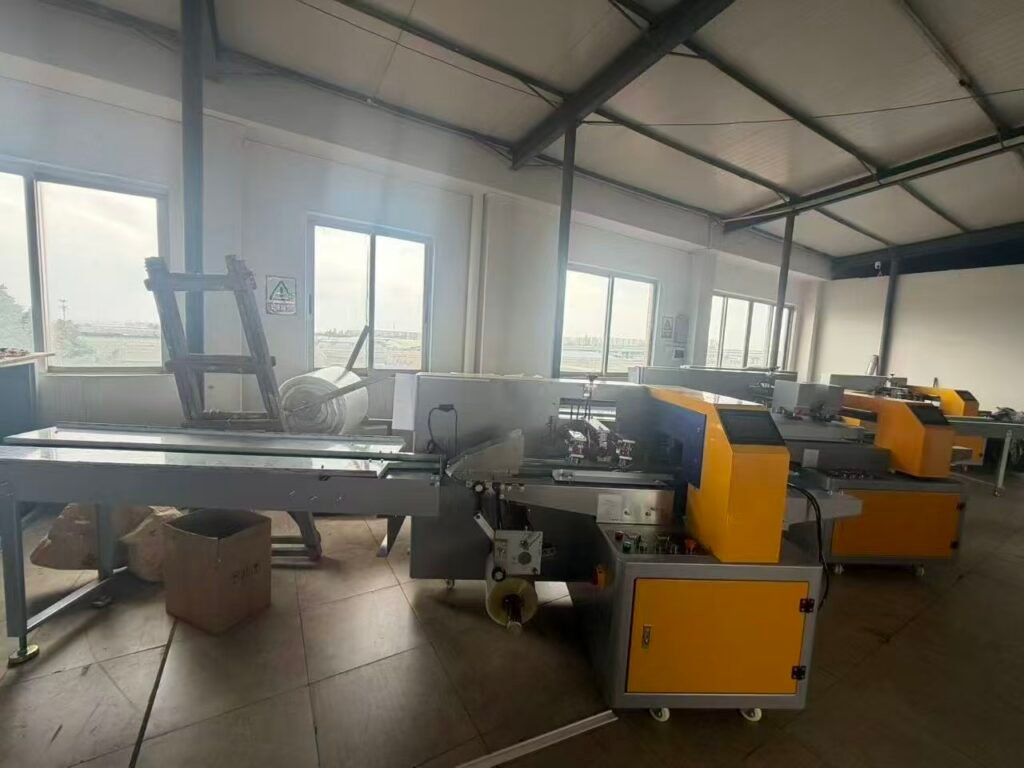
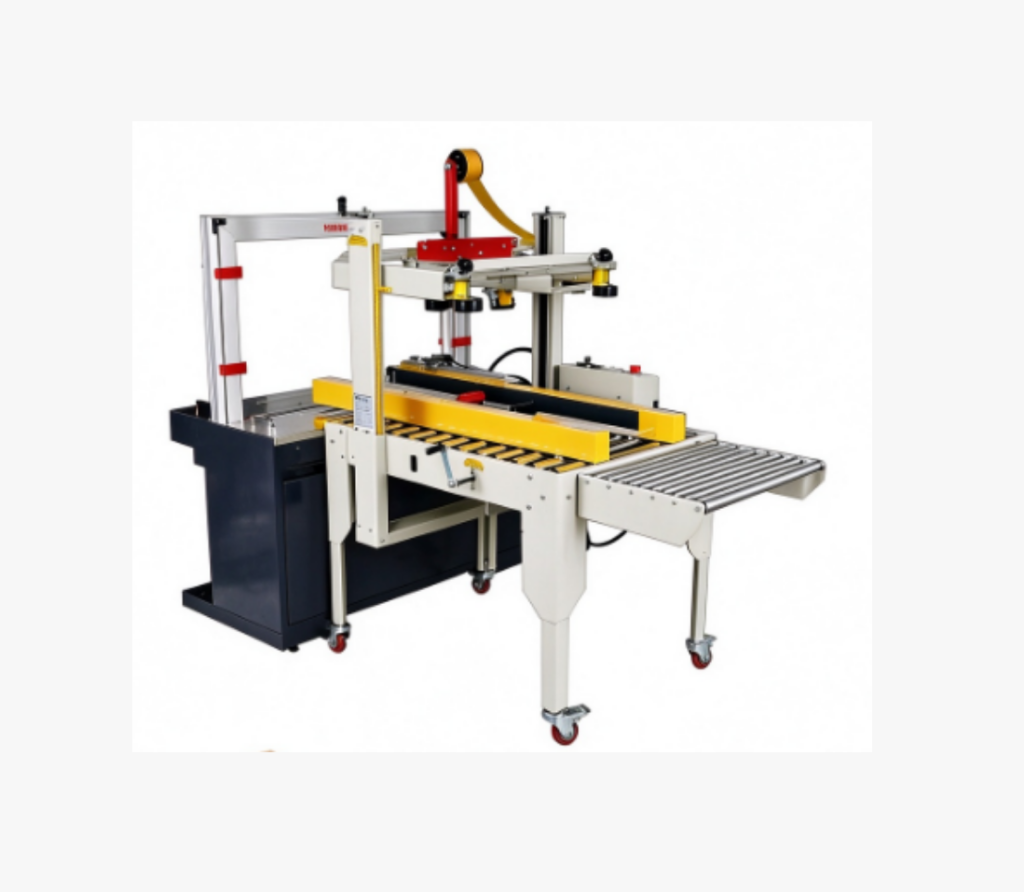
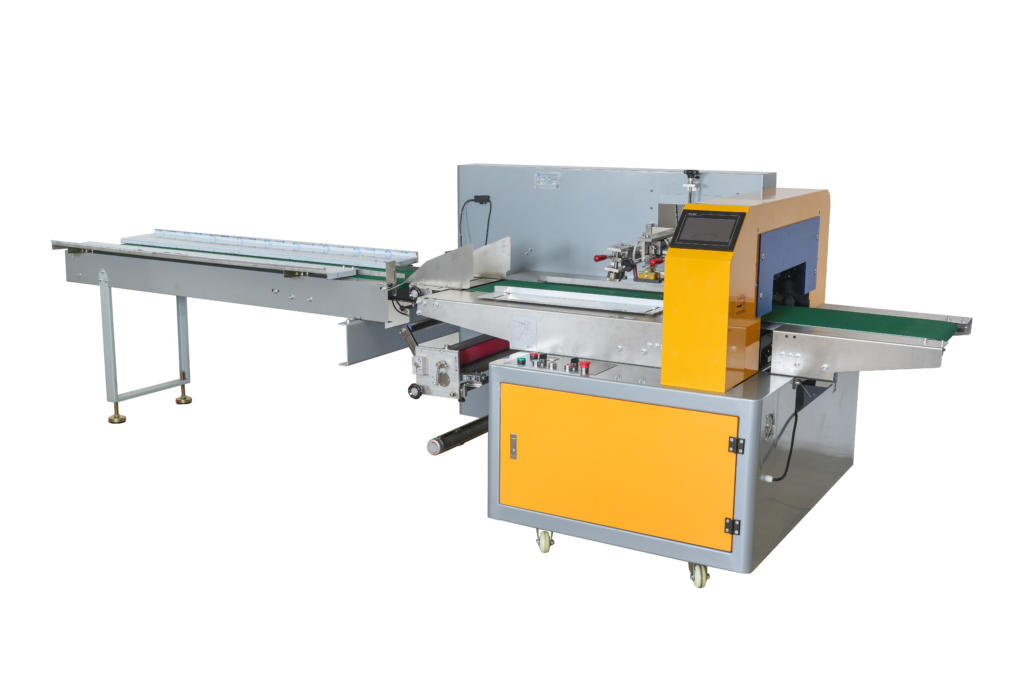
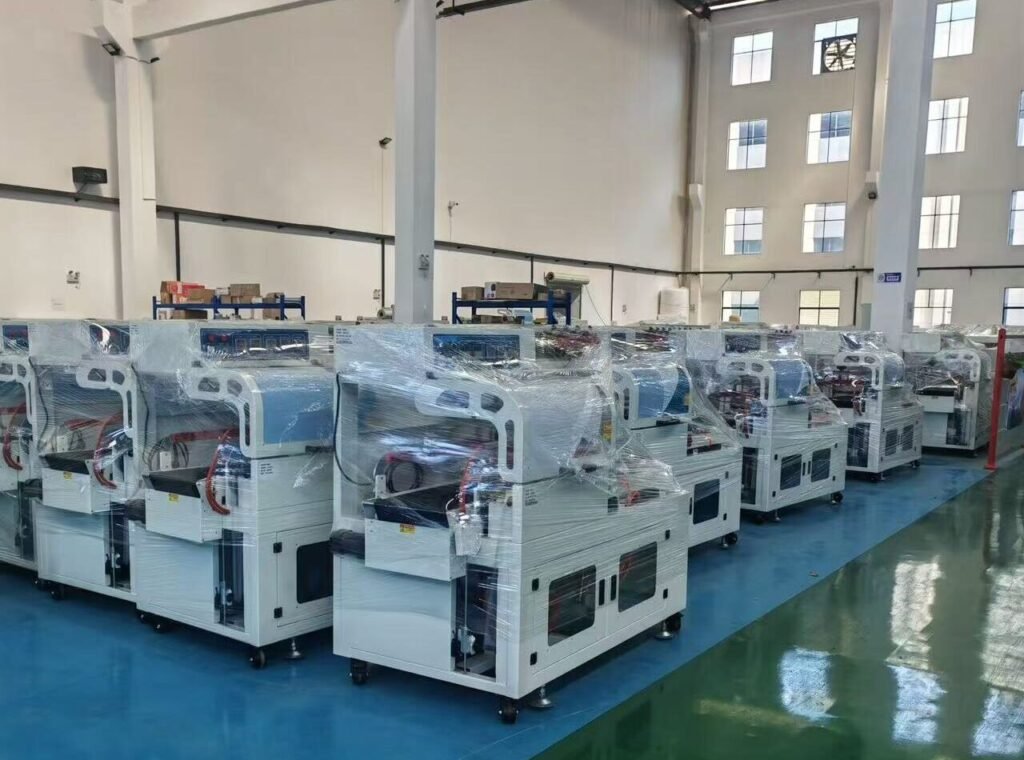
Our packaging equipment range includes automatic carton erectors, carton sealing machines, carton strapping equipment, shrink packaging machines, horizontal packaging machines, and other automated packaging solutions.
We help customers evaluate equipment according to carton dimensions, packaging requirements, production capacity, and factory layout.
Our support can include pre-sales consultation, equipment configuration, customization, installation guidance, technical training, spare parts supply, and after-sales service.
Our goal is to help manufacturers reduce repetitive manual operations and build more efficient and organized packaging processes.
Conclusion: Choose a Carton Erector That Matches Your Production Requirements
An automatic carton erector machine can help factories standardize carton forming, reduce manual box assembly, and support a more continuous end-of-line packaging process.
However, the right machine is not necessarily the one with the highest advertised speed or the lowest price.
Before making a purchase, evaluate carton dimensions, carton style, cardboard quality, production capacity, sealing method, changeover requirements, and compatibility with downstream equipment.
Providing real carton samples and complete production information is one of the best ways to reduce the risk of choosing unsuitable equipment.
Looking for an automatic carton erector machine for your factory?
Contact Huixin Intelligent Technology Co., Ltd. and share your carton photos, dimensions, cardboard specifications, and required production capacity. Our team can help evaluate a suitable carton forming solution for your production line.
Frequently Asked Questions About Automatic Carton Erector Machines
1. What is an automatic carton erector machine?
An automatic carton erector machine takes flat corrugated carton blanks, opens them into box shapes, folds the bottom flaps, and seals the carton bottom according to the machine configuration.
2. What is the difference between a carton erector and a carton sealer?
A carton erector forms a flat carton blank into an open box and usually seals its bottom. A carton sealer closes and seals the top of a carton after products have been loaded inside.
3. What carton sizes can an automatic carton erector handle?
The supported carton dimensions depend on the machine model. Buyers should provide the minimum and maximum carton length, width, and height to confirm compatibility.
4. Can one carton erector handle multiple carton sizes?
Some models can handle several carton specifications within their operating range. The adjustment method and changeover time vary by machine. Confirm the supported sizes and adjustment procedure with the manufacturer.
5. What types of carton sealing methods are available?
Depending on the machine configuration, carton bottoms may be sealed with adhesive tape or hot-melt adhesive. The suitable method depends on the carton structure and production requirements.
6. Can an automatic carton erector connect to a carton sealing and strapping machine?
Yes. An automatic carton erector can be connected to downstream conveyors, carton packing stations, carton sealing machines, and strapping equipment, subject to compatible layout and operating speeds.
7. What information is needed to get a quotation?
Prepare carton photos or samples, carton dimensions, cardboard specifications, required output, bottom-sealing method, number of carton sizes, and factory layout information.